If You Want the Job…Build the Framework (PART I)

Think You’re Ready for Pro Sport? Try This Test.
Every week I get messages from young coaches asking the same thing:
“How do I actually get a job in pro sport?”
Not a placement. Not a shadowing gig.
A real job. Contract. Responsibility. Your name on things.
Last week I posted a tiny snippet of a conversation I had with Darren Burgess about a staff member I recently hired. The question was basically:
“Why did that guy get the job over the others?”
Simple answer:
He had a clear framework he could speak to.
Same academic level as others. Similar experience on paper.
But he could explain how he thinks and why he does what he does.
That’s what this two-part blog is about.
Part 1 (this one): How to build a framework as a young practitioner
Part 2: How to use that framework in the interview
Let’s get into it.
Why Frameworks Get You Hired
Let me pull the curtain back on the process.
In the last couple of roles I’ve advertised, we had 60–80 resumes for each position.
That’s 60–80 people with roughly:
A degree (often a Masters)
Some internships or roles
A list of courses, books, and buzzwords
On paper, a lot of you look very similar.
So what makes someone stand out?
Once you’re in the room (or on the Zoom), I’m not just asking:
What have you done?
I’m asking:
How do you think?
What do you actually believe about training?
Can you stand on your own two feet and take a position?
A framework is what lets you do that.
It’s your operating system as a coach:
“Given this athlete, this context, this problem – here’s how I think about it, and here’s what I do.”
No framework = random collection of ideas.
Framework = a system that joins your education, experience and study into something coherent.
-
First thing I look for is a baseline level of education.
For me, minimum is a Bachelor’s degree in a relevant area. That usually gives you:
Anatomy
Physiology
Biomechanics (even if only lightly)
Basic understanding of how the body works
That’s the entry ticket. It doesn’t make you special – it just means we can start from somewhere.
These days, a lot of jobs are asking for a Masters in Strength & Conditioning or similar. That’s fine. But here’s the uncomfortable truth:
Not all Masters degrees are created equal.
Some programs are so general they’re barely more useful than a Bachelor’s. Others challenge how you think, force you to write, question, analyse, and apply.
So if you put a Masters on your CV, you should be ready for me to ask:
“What did your course actually teach you?”
“How are you a better coach because of it?”
“What can you do now that you couldn’t do before?”
Same goes for a PhD. When people ask me what I learned from mine, I have a very clear answer about:
How it sharpened my thinking
What skills it gave me
How that benefits my employer
You don’t need a PhD. But whatever you’ve done academically, you must be able to explain its value in practical terms.
That’s the first building block of your framework.
-
Next thing I look at is your experience and mentoring.
You either:
Have real coaching experience, or
You don’t.
You either:
Have been exposed to high-level practitioners, or
You haven’t.
I’m not just interested in where you’ve worked. I want to know:
Who have you learned from? Who shaped your coaching?
Because that tells me a lot about your framework.
Example from my own philosophy:
I don’t like overly reductionist approaches for healthy athletes.If I’ve got a strong, healthy player, I don’t see much sense in:
Kneeling them on the floor to do some chopped-up “core” drill
…when I could:Stand them up
Get them applying force through the ground
Coordinate their body in a way that looks like actual sport
That’s part of my framework.
So if you tell me you’ve worked under a coach with 20+ years in the game, I want to know:
What did they believe?
What did they hammer into you?
How has that shaped what you do now?
Your heritage as a coach matters.
I’ve hired a lot of staff over the years. The ones who’ve gone on to do really well all had one thing in common:
They built on a solid base of mentorship.
They didn’t appear from nowhere.Harsh reality:
If you’ve never worked with anybody of real substance, you usually don’t bring much of substance.That doesn’t mean you’re doomed.
It means your priority is clear: go and fix that gap.Volunteer in the right environments
Take a role at a lower level if you have to
Get around good practitioners and actually learn
You’re not just collecting logos for your CV.
You’re building your coaching lineage. -
Mentors don’t just have to be people you’ve worked under.
They can also be coaches you’ve studied deeply.So I’m interested in questions like:
Whose work have you gone deep on?
Whose books, programs, lectures have you really studied?
Can you explain their ideas and where you agree or disagree?
If you tell me:
“I’ve studied a lot of Christian Thibaudeau’s work.”
Or: “I’ve gone deep on Charles Poliquin’s loading strategies.”
Then I’ll follow up with:
“Okay, show me how that actually shows up in your programming.”
One of the best hires I’ve made in my career impressed me with a simple thing:
He made a sharp observation about a coach who had mentored me directly. It showed:He understood the nuance
He’d actually thought about the material
He wasn’t just quoting – he was processing
To this day, he’s still excellent. That didn’t happen by accident.
So your framework has three main inputs:
Academics – what you’ve been formally taught
Mentoring/experience – who you’ve learned from directly
Study – who you’ve studied deeply from a distance
How those three things combine is your framework.
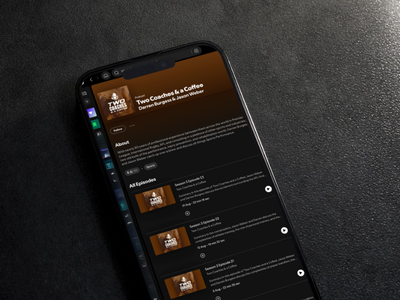
Two Coaches and a Coffee Podcast by Jason Weber and Darren Burgess
WE’RE ALWAYS SHARING CAREER ADVICE FOR YOUNG COACHES IN OUR PODCAST, LISTEN TO SOME EPISODE HERE
Turn It Into a One-Page Framework (Version 1.0)
This is where most young practitioners fall over.
They’ve:
Done the degree
Done a Masters
Read the books
Listened to the podcasts
…but it’s all just floating around in their head as unconnected dots.
If you want to stand out, do this:
-
Literally. One or two pages max.
Include things like:
Your view on strength training
Your preferred periodisation style (block? conjugate? why?)
Your key principles for speed and power
Your non-negotiables in the gym
Your red flags – things you WILL NOT accept
-
For each key idea, ask:
Where did I get this from?
Uni?
A mentor?
A specific coach or author?
This does two things:
It clarifies your thinking
It shows you where your gaps are
-
The goal is not to have a pretty PDF.
The goal is to be able to sit in an interview and say:“Here’s how I think about training. Here’s why. Here’s who shaped it. And here’s how I’d apply it in your environment.”
That’s what the guy I hired could do. That’s why he separated himself.
Why This Matters in an Interview
In a proper interview, you’ll often be given hypothetical scenarios.
Sometimes, I’ll intentionally give you a scenario that I hope you disagree with.
Why?
Because I want to see:
Do you have a spine?
Do you have a position?
Can you respectfully disagree and explain your reasoning?
For example:
Would you walk past a squat that’s barely to 90°, with a healthy athlete who has no reason to be restricted?
Would you load up a squat where the athlete’s getting crushed – spine flexing, pelvis dumping under, no tension?
Would you ignore obvious asymmetries and just “add more weight”?
If your answer is:
“Well… I guess it depends…”
with nothing behind it, that tells me you don’t have a framework.
If your answer is:
“No, here’s why I wouldn’t accept that, and here’s how I’d coach it or regress it…”
that tells me:
You’ve thought about standards
You understand risk vs reward
You’re not just a rep counter
That’s who I can work with.

What Actually Gets You Hired (Spoiler: Not Your Masters)
Matching Your Framework to the Environment You Want
Let’s say you want to work in US college football.
You know:
The athletes need to be strong
The environment is intense
Lifting heavy is non-negotiable
If you’ve:
Never coached a heavy squat
Never progressed someone beyond basic goblet squats
Never lived inside a genuine strength environment
You’re going to struggle.
That doesn’t mean give up. It means:
Maybe your first job is high school
Or a lower division
Or a semi-pro environment where you can actually learn to coach those demands
Your framework shouldn’t just describe where you are now.
It should also highlight where you’re weak and what you need to go after next.
Key Takeaways (For the Young Guns)
If you’re serious about getting into (and staying in) high performance sport:
Get your academics right
Bachelor’s as a baseline
Any further study must be explainable in practical terms
Be ready to answer: “What did this actually give me?”
Build your heritage
Get around quality coaches
Learn from them deliberately, not passively
Be able to say: “I come from this coaching tree, and here’s what I took from it.”
Study deeply, not just widely
Pick a few key coaches/authors and go deep
Understand their systems, not just their quotes
Be able to show where their ideas show up in your programs
Turn it into a framework document (Version 1.0)
One or two pages, max
Clear principles, preferences and non-negotiables
Linked back to where you learned each idea
Accept that it will evolve
Version 1.0 won’t be perfect
As you coach more, work with better people, and see more problems, your framework should get sharper, not softer
If you turn up to an interview with:
A list of degrees
A list of books
And no plausible system that ties them together
I’ll see through that. And I won’t hire you.
If you turn up with:
A clear framework
A sense of where you’ve come from
And the ability to explain and defend your ideas
Now we’re talking.

In Part 2, I’ll walk through how to use that framework in the interview itself:
How to prep
How to handle hypotheticals
How to steer the conversation towards your strengths
But for now, your job is simple:
Build Version 1.0 of your framework.
Don’t overthink it. Get it on paper. Start there.

Don’t overthink it. Get it on paper. Start there. - Jason Weber